The Kura Kura Initiative: Refugee Resilience with Regenerative Agriculture
Uganda
Agriculture, Restoration, Education$17,412
USDTotal funded by 78 donors with matching
UN
Unidos Social Innovation Center
Uganda
Community GroupWe are a collective of refugees living in Uganda, Nakivale Refugee Camp, home to over 200,000 people, from Congo, Burundi, Somalia, Ethiopia, Eritrea, and Sudan. Since 2018, we have united to combat hunger caused by declining humanitarian aid and to build sustainable livelihoods through regenerative solutions. Our mission is to empower refugees by providing inclusive education, socioeconomic opportunities, and essential skills for self-sufficiency. We equip our community with the knowledge and tools to thrive, fostering an environment where growth, self-reliance, and resilience are possible. Beyond education, we focus on sustainability through hands-on training in permagarden, soil regeneration, vermicomposting, and food forest. These initiatives restore the land, improve food security, and create a self-sustaining community. Our holistic approach addresses food security but also builds climate resilience, reducing dependency on external aid
NO
Now and Tomorrow
Washington, United States
NonprofitNow and Tomorrow is a 501-c-3 tax exempt organization that provides support to refugees through Now and Tomorrow Uganda and Unidos Social Innovation Center, independent Uganda-based charities and supports select US-based organizations working in food security, homelessness and education.
Project story
Nakivale Refugee Settlement is one of the oldest and biggest refugee settlements in Uganda, home to over 200,000 people. As humanitarian aid has dramatically declined, communities are facing an urgent crisis. Nearly 85% of residents depend on agriculture for survival, yet climate change, unpredictable rainfall, and depleted soils continue to threaten their livelihoods and increase vulnerability.
The settlement experiences almost five months of dry season every year. During these harsh periods, many families struggle to afford even one meal a day, leading to rising levels of malnutrition and food insecurity. Children are dropping out of school due to hunger, and acute malnutrition has reached up to 5% this year.
Our Solution:
Working directly with the community, we have designed an integrated and regenerative approach that addresses multiple challenges at once:
Regenerate soil health through intensive soil preparation enhanced with vermicompost and biochar
Improve food security for 100 households using resilient permagarden design
Strengthen the local economy through income opportunities linked to carbon credits
Restore biodiversity by planting 15 native tree species per household, including nitrogen-fixing and food-producing trees
Our goal is to stabilize household food security, even during the long dry seasons, while relying on locally available resources and community participation.
Our Approach
We aim to train 100 households in Permagarden Resilient Design, an agroecological approach focused on building living soil and strengthening resilience in dryland conditions. The training includes deep soil preparation through double-dug beds, soil amendment using vermicompost and biochar, and effective rainwater management through bioswales designed to catch, slow, spread, and sink water into the soil. Using small plots of 20 m x 30 m, the average size allocated to refugee households by the government, participants will learn how to grow diverse and productive gardens by integrating 15 species of trees and 5 different crops within the same space.
Before the training begins, households will collect food waste to feed community vermicomposting systems, transforming organic material into high-quality compost. In parallel, we will produce 40 tons of biochar from maize stalks — a locally abundant waste material. Both are then used during the training itself, giving participants hands-on experience with the materials they will continue to work with in their own gardens. After completing the training, each household receives a toolkit of hoes, spades, 15 tree seedlings, and 5 indigenous seed varieties. We expect at least 80% of participants to have productive gardens within one month.
Beyond food security, productive gardens open pathways to income generation — including participation in carbon credit schemes linked to biochar production, offering households a new source of economic resilience.
Why it works
Ecology: We create a healthy soil food web that supports sustained production and regenerative growth.
Biodiversity: We integrate plants, trees and animals that work together in ways to support the overall health and production of the growing environment.
Water: Our permagarden design integrates multiple strategies to slow, spread, sink, and manage rainwater and other water resources.
Design: Each permagarden is context-specific, optimizing local resources and external influences for improved efficiency, production, resilience and regeneration.
Resources: Working in refugee settlements where resources are limited, we maximize the use of locally available natural and man-made materials and waste streams to increase and diversify production and reduce dependence on external inputs.
Testimonial:
Expected Impact
Within one month after training, participating households will begin harvesting food directly from their gardens, improving access to at least two meals per day
1,500 trees(Food trees, Nitrogen fixers and indegenous trees) will be planted to strengthen biodiversity and ecological restoration
40 tons of biochar will be produced, helping sequester approximately 85 tons of CO₂ back into the soil
Soil structure and water infiltration are expected to improve significantly, with drainage capacity increasing by at least 4% within six months
Households will gain practical knowledge and long-term resilience skills that reduce dependence on humanitarian aid and strengthen self-reliance within the settlement
Yields are expected to double after the first farming circle.
Our Team:
We are a dedicated team of 5 professionals with diverse backgrounds in regenerative agriculture, holistic land management, climate action, and community development. Several of us are refugees ourselves — a lived reality that brings unique insight into the challenges these communities face and deepens our ability to design solutions that are truly context-specific and culturally appropriate.
Our team is led by Paulinho Muzaliwa, an award-winning certified permaculture teacher, Permagarden Resilient Designer, and practitioner with extensive experience in holistic land management. Together, we bring 6 years of hands-on experience working directly with displaced and host communities in refugee settlements across Uganda — as educators, practitioners, and grassroots organizers who are deeply rooted in the communities we serve.
Workplan:
Phase 1: Preparation & Community Mobilization
Phase 2: Resource Collection & Production
Phase 3: Training & Capacity Building
Phase 4: Garden Establishment
Phase 5: Monitoring & Mentorship
Phase 6: Evaluation & Sustainability
Project updates
Team
Donations (78)
The Kura Kura Initiative: Refugee Resilience with Regenerative Agriculture
Uganda
Agriculture, Restoration, Education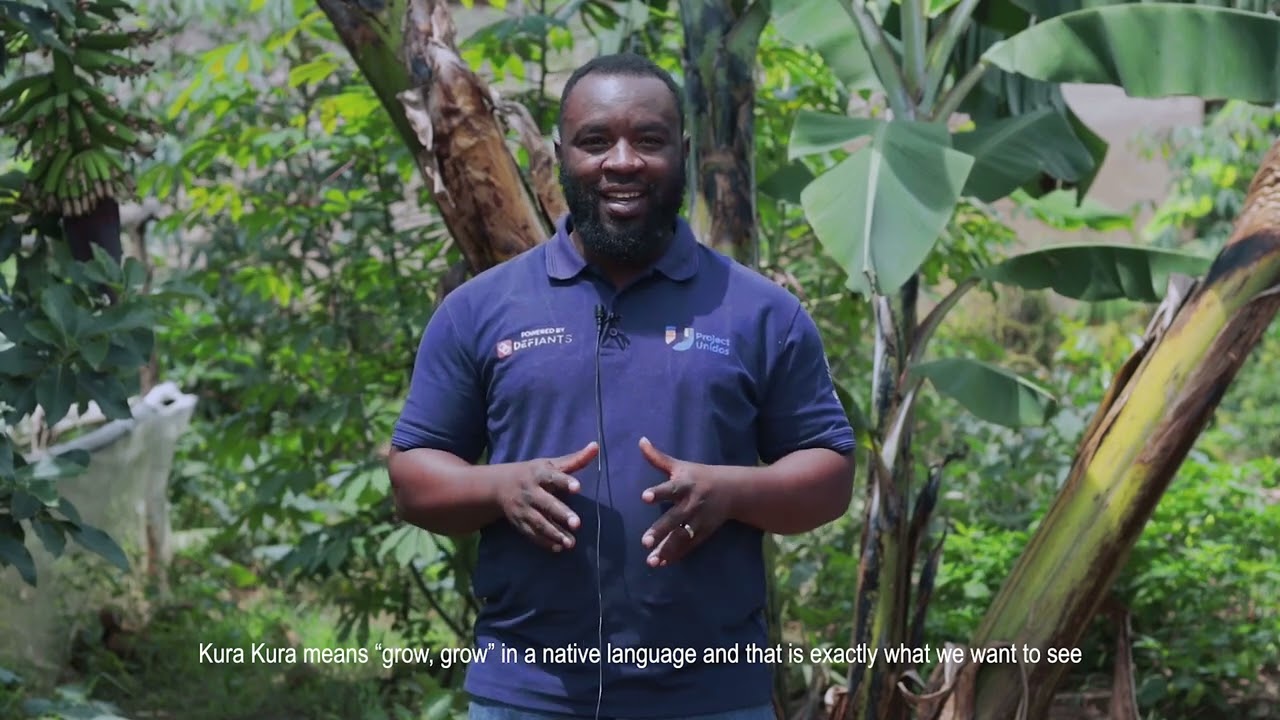
UN
Unidos Social Innovation Center
Uganda
Community GroupWe are a collective of refugees living in Uganda, Nakivale Refugee Camp, home to over 200,000 people, from Congo, Burundi, Somalia, Ethiopia, Eritrea, and Sudan. Since 2018, we have united to combat hunger caused by declining humanitarian aid and to build sustainable livelihoods through regenerative solutions. Our mission is to empower refugees by providing inclusive education, socioeconomic opportunities, and essential skills for self-sufficiency. We equip our community with the knowledge and tools to thrive, fostering an environment where growth, self-reliance, and resilience are possible. Beyond education, we focus on sustainability through hands-on training in permagarden, soil regeneration, vermicomposting, and food forest. These initiatives restore the land, improve food security, and create a self-sustaining community. Our holistic approach addresses food security but also builds climate resilience, reducing dependency on external aid
Trusted by
NO
Now and Tomorrow
Washington, United States
NonprofitNow and Tomorrow is a 501-c-3 tax exempt organization that provides support to refugees through Now and Tomorrow Uganda and Unidos Social Innovation Center, independent Uganda-based charities and supports select US-based organizations working in food security, homelessness and education.
Project story
Nakivale Refugee Settlement is one of the oldest and biggest refugee settlements in Uganda, home to over 200,000 people. As humanitarian aid has dramatically declined, communities are facing an urgent crisis. Nearly 85% of residents depend on agriculture for survival, yet climate change, unpredictable rainfall, and depleted soils continue to threaten their livelihoods and increase vulnerability.
The settlement experiences almost five months of dry season every year. During these harsh periods, many families struggle to afford even one meal a day, leading to rising levels of malnutrition and food insecurity. Children are dropping out of school due to hunger, and acute malnutrition has reached up to 5% this year.
Our Solution:
Working directly with the community, we have designed an integrated and regenerative approach that addresses multiple challenges at once:
Regenerate soil health through intensive soil preparation enhanced with vermicompost and biochar
Improve food security for 100 households using resilient permagarden design
Strengthen the local economy through income opportunities linked to carbon credits
Restore biodiversity by planting 15 native tree species per household, including nitrogen-fixing and food-producing trees
Our goal is to stabilize household food security, even during the long dry seasons, while relying on locally available resources and community participation.
Our Approach
We aim to train 100 households in Permagarden Resilient Design, an agroecological approach focused on building living soil and strengthening resilience in dryland conditions. The training includes deep soil preparation through double-dug beds, soil amendment using vermicompost and biochar, and effective rainwater management through bioswales designed to catch, slow, spread, and sink water into the soil. Using small plots of 20 m x 30 m, the average size allocated to refugee households by the government, participants will learn how to grow diverse and productive gardens by integrating 15 species of trees and 5 different crops within the same space.
Before the training begins, households will collect food waste to feed community vermicomposting systems, transforming organic material into high-quality compost. In parallel, we will produce 40 tons of biochar from maize stalks — a locally abundant waste material. Both are then used during the training itself, giving participants hands-on experience with the materials they will continue to work with in their own gardens. After completing the training, each household receives a toolkit of hoes, spades, 15 tree seedlings, and 5 indigenous seed varieties. We expect at least 80% of participants to have productive gardens within one month.
Beyond food security, productive gardens open pathways to income generation — including participation in carbon credit schemes linked to biochar production, offering households a new source of economic resilience.
Why it works
Ecology: We create a healthy soil food web that supports sustained production and regenerative growth.
Biodiversity: We integrate plants, trees and animals that work together in ways to support the overall health and production of the growing environment.
Water: Our permagarden design integrates multiple strategies to slow, spread, sink, and manage rainwater and other water resources.
Design: Each permagarden is context-specific, optimizing local resources and external influences for improved efficiency, production, resilience and regeneration.
Resources: Working in refugee settlements where resources are limited, we maximize the use of locally available natural and man-made materials and waste streams to increase and diversify production and reduce dependence on external inputs.
Testimonial:
Expected Impact
Within one month after training, participating households will begin harvesting food directly from their gardens, improving access to at least two meals per day
1,500 trees(Food trees, Nitrogen fixers and indegenous trees) will be planted to strengthen biodiversity and ecological restoration
40 tons of biochar will be produced, helping sequester approximately 85 tons of CO₂ back into the soil
Soil structure and water infiltration are expected to improve significantly, with drainage capacity increasing by at least 4% within six months
Households will gain practical knowledge and long-term resilience skills that reduce dependence on humanitarian aid and strengthen self-reliance within the settlement
Yields are expected to double after the first farming circle.
Our Team:
We are a dedicated team of 5 professionals with diverse backgrounds in regenerative agriculture, holistic land management, climate action, and community development. Several of us are refugees ourselves — a lived reality that brings unique insight into the challenges these communities face and deepens our ability to design solutions that are truly context-specific and culturally appropriate.
Our team is led by Paulinho Muzaliwa, an award-winning certified permaculture teacher, Permagarden Resilient Designer, and practitioner with extensive experience in holistic land management. Together, we bring 6 years of hands-on experience working directly with displaced and host communities in refugee settlements across Uganda — as educators, practitioners, and grassroots organizers who are deeply rooted in the communities we serve.
Workplan:
Phase 1: Preparation & Community Mobilization
Phase 2: Resource Collection & Production
Phase 3: Training & Capacity Building
Phase 4: Garden Establishment
Phase 5: Monitoring & Mentorship
Phase 6: Evaluation & Sustainability
Project updates
Team
Location
Uganda
This project was part of
Round 3
Jul 1-21, 2026
Supporting community-led nature projects around the world.
Matching funds provided by


