The Munansi Community-Led Climate Resilience and Regenerative Livelihoods
Uganda
Conservation, Agriculture, CommunityMU
Munansi Green Initiaitive
Uganda
NonprofitMunansi Green Initiative is a youth-led civil society organization dedicated to promoting environmental conservation, climate change mitigation through community sensitization, and restoration of endangered ecosystems. The organization is community-based and focuses on improving livelihoods, raising literacy levels, and providing access to basic services like education, safe domestic water, and sanitation hygiene education to the region's poorest people. Its main objective is inspiring a generation of community leaders and environmental rights defenders who are pro-environmental conservation and protection.
Project story
The Munansi Community-Led Climate Resilience and Regenerative Livelihoods Project
The project is being implemented in Uganda, working directly with rural and peri-urban communities, including farmers, youth groups, women’s associations, and school communities. It focuses on strengthening local capacity to respond to climate change while improving household incomes and restoring degraded landscapes.
The initiative integrates regenerative agriculture, sustainable beekeeping (Munansi Hives), agroforestry, and environmental education. Through Munansi Hives, farmers and youth are trained in modern beekeeping practices and supported with hives to promote pollinator conservation, improve crop productivity, and generate income from honey and other bee products. In schools and communities, food and fruit forests are being established to enhance nutrition, biodiversity, and hands-on environmental learning. The project also supports women’s green entrepreneurship and youth-led climate action through training, eco-clubs, and awareness campaigns.
To date, the project has made steady progress by engaging and training farmers and youth in sustainable apiculture, supporting a growing beekeeping association of over 300+ farmers, and working with community and school partners to establish food and fruit forest initiatives that benefit hundreds of learners and community members. The initiative has also strengthened women’s economic participation through savings groups and small-scale green enterprises, while actively contributing to national and international climate platforms and dialogues.
Overall, the project is building a scalable model of community-led climate action that restores ecosystems, improves livelihoods, and empowers local people to become active stewards of their environment.
Project updates
Team
The Munansi Community-Led Climate Resilience and Regenerative Livelihoods
Uganda
Conservation, Agriculture, Community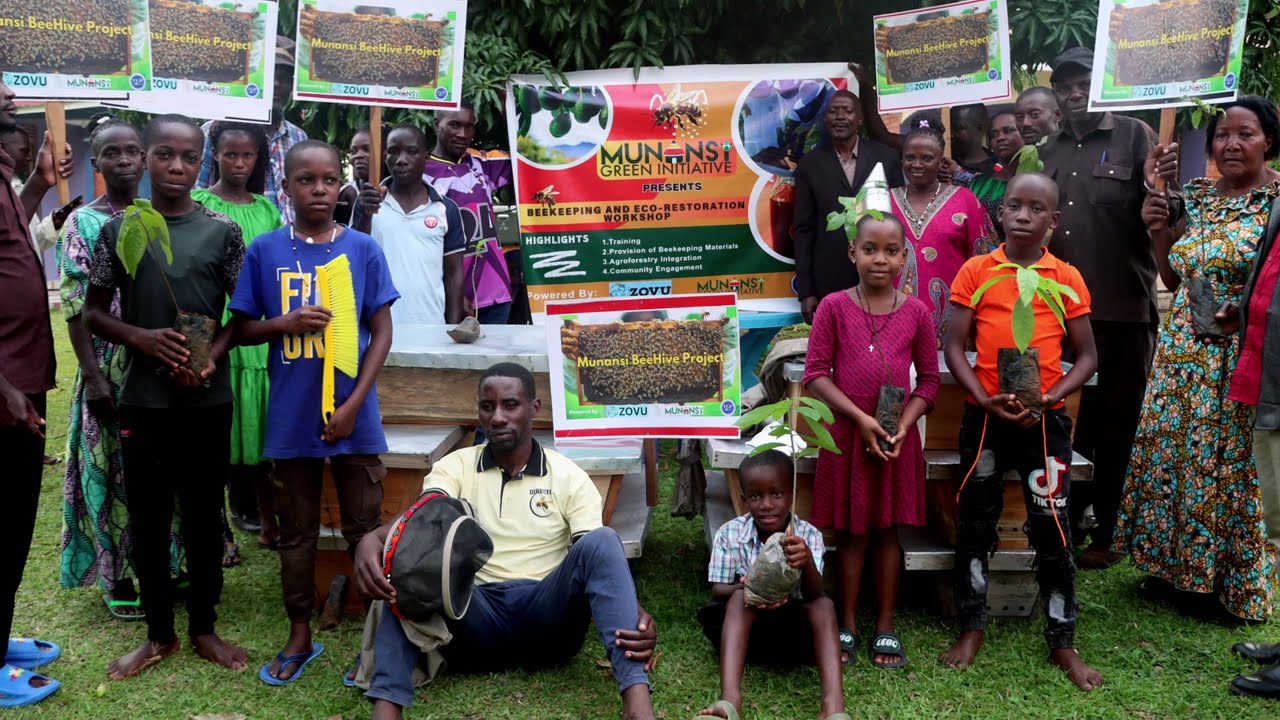
MU
Munansi Green Initiaitive
Uganda
NonprofitMunansi Green Initiative is a youth-led civil society organization dedicated to promoting environmental conservation, climate change mitigation through community sensitization, and restoration of endangered ecosystems. The organization is community-based and focuses on improving livelihoods, raising literacy levels, and providing access to basic services like education, safe domestic water, and sanitation hygiene education to the region's poorest people. Its main objective is inspiring a generation of community leaders and environmental rights defenders who are pro-environmental conservation and protection.
Project story
The Munansi Community-Led Climate Resilience and Regenerative Livelihoods Project
The project is being implemented in Uganda, working directly with rural and peri-urban communities, including farmers, youth groups, women’s associations, and school communities. It focuses on strengthening local capacity to respond to climate change while improving household incomes and restoring degraded landscapes.
The initiative integrates regenerative agriculture, sustainable beekeeping (Munansi Hives), agroforestry, and environmental education. Through Munansi Hives, farmers and youth are trained in modern beekeeping practices and supported with hives to promote pollinator conservation, improve crop productivity, and generate income from honey and other bee products. In schools and communities, food and fruit forests are being established to enhance nutrition, biodiversity, and hands-on environmental learning. The project also supports women’s green entrepreneurship and youth-led climate action through training, eco-clubs, and awareness campaigns.
To date, the project has made steady progress by engaging and training farmers and youth in sustainable apiculture, supporting a growing beekeeping association of over 300+ farmers, and working with community and school partners to establish food and fruit forest initiatives that benefit hundreds of learners and community members. The initiative has also strengthened women’s economic participation through savings groups and small-scale green enterprises, while actively contributing to national and international climate platforms and dialogues.
Overall, the project is building a scalable model of community-led climate action that restores ecosystems, improves livelihoods, and empowers local people to become active stewards of their environment.
Project updates
Team
Location
Uganda