Earth One: A regenerative practice in Ser Jagas
India
Agriculture, Community, RestorationEA
EarthJust Ecosystems
Himachal Pradesh, India
Nonprofit, Community Group, BusinessEarthJust began in 2016 when its founders moved from consumption-led urban life to a zero-waste, mindful existence in the hills of Himachal Pradesh. What started as a personal reckoning with waste became a movement: live the change first, then invite others in. EarthJust spreads the joy of sustainability — moving people from Swayam (self) to Samudaya (community) to Samaj (systems). It's a place based movement, anchored in purpose, driven by poeple. Its work is not program delivery; it is the creation of spaces where people practise, connect, prototype, and then lead. Over a decade it has convened 500+ Samwaads, reached 70,000+ participants, trained 35 educator cohorts, planted 2,000+ trees, and grown a live demonstration place — Earth Farm — where regenerative practice is visible, replicable, and grounded in local knowledge.
Project story
Maanu spent hours on his knees, piecing together broken tiles into a mosaic on the floor of the bathroom at Earth Farm.
Not because he was asked to. Because he wanted it to be beautiful.
When he finished, he didn't call us. He called his family. Then the neighbours. He wanted them to see — this thing we usually throw away, this thing we call waste, this is what it can become.
That moment is Earth Farm in miniature.
Earth Farm sits in Ser Jagas, Sirmaur, in the mid-hills of Himachal Pradesh. Since 2022, EarthJust has been building a working farm here that doesn't separate ecology from economy, or demonstration from daily life. The farm cultivates fruits, grains, herbs, local millets, and traditional crops organically. A food and fodder forest provides feed for village animals, fuel wood for households, and habitat for wildlife. All structures are built from reclaimed and discarded materials — construction methods kept deliberately visible so neighbours can learn and replicate. There is a community walkway, a space for elders and children to wander through and engage. A play area for local youth.
And there is Maanu. Now, on any construction at the farm, he arrives with his own recommendations — ecobricks here, construction waste in the foundation there, broken glass sorted and reused. What once seemed like the eccentric dream of outsiders has become, in a few years, his own practice. His own pride.
He is not alone. A family lives on the farm, managing their own cow, growing their own vegetables, working as collaborators. Several neighbours — people who used to travel far for daily wage work — now work next to their own homes. Not as labour. As equals, as knowledge holders, as co-designers of what this place is becoming.
EarthLove — EarthJust’s food systems initiative — is woven into the farm’s ecology. Himachal Pradesh is home to dozens of native fruits — timru (Sichuan pepper), wild apricots, wild persimmon, wild figs, kafal, seabuckthorn — that are nutritionally extraordinary but commercially invisible. As smallholder farmers shift toward monoculture cash crops, these fruits are left to rot on the branch. Not because they aren’t good. Because there has been no market for them.
EarthLove changes that — quietly, practically, season by season. Surplus and short-shelf-life fruits from the farm and the surrounding forest are processed into clean-label jams, chutneys, and pickles using solar drying and natural preservation methods, through existing government food processing units. No new infrastructure. A model any hill village could, in principle, adopt. The men and youth of Ser Jagas are learning this process as co-producers, not as labour — building a livelihood skill that belongs to them.
A pilot in 2024, funded personally by EarthJust’s founders, produced 300+ jars and bottles from 400+ kg of fruit that would otherwise have been discarded. This funding round formalises what has already proved itself.
The Ecosystem We Work In
Himachal is a state where traditional knowledge of seeds, water, soil, and forest runs deep — and where economic pressure is pulling younger generations off the land. Monoculture is spreading. Elders with irreplaceable knowledge are not being heard. Earth Farm works in this gap: not as experts with solutions, but as neighbours who chose to stay, build, learn, and share.
The broader EarthJust ecosystem — EarthGreen (farm-forest practice), EarthCommunity (educator communities), EarthThink (policy dialogue), and EarthCatalyst (organisational incubation) — means that what is learned on the farm does not stay on the farm. It flows into schools, policy spaces, and other organisations through a network built over a decade.
2022
Farm established
1 acre+
Under cultivation
6+
Village families engaged
3
Practice zones
What This Funding Will Enable
A grant in this round will directly support:
Deepening and documenting the organic cultivation system — creating replicable models for local adoption
Expanding the food forest and fodder belt with locally appropriate species
Sustaining village employment and structured capacity-building for workers
Developing the community commons and youth play area as active engagement spaces
Documenting traditional knowledge held by village workers — creating a living archive
Producing accessible, local-language materials so other farms and communities can replicate what is being learned here
Formalising EarthLove — FSSAI certification, first documented production season, market exhibition presence, and fair wages for village co-producers
The funding ask is calibrated to the scale of impact, not the scale of ambition. A smaller grant sustains and documents what already exists. A larger grant allows expansion of the food forest and EarthLove product development, and the creation of materials that carry this model beyond this farm.
A Note for Reviewers
Earth Farm is not a pilot. It is a life in progress — built on the same principles EarthJust has held since 2016.
What makes it unusual is the insistence on not separating things that are usually kept apart: ecology and livelihood, demonstration and employment, traditional knowledge and new practice. A jar of wild apricot chutney or timru pickle can carry all of that — the soil, the season, the person who picked it — into a market that has never seen it before.
EarthJust has operated without external grants for most of its existence — sustained by earned income, community reciprocity, and the founders’ own choices about how to live. This application is not a signal of dependency; it is an invitation to amplify something that is already alive and growing.
The farm does not need to be rescued. It needs to be resourced.
The future is not built — it is grown.
What grows here, changes everywhere.
Project updates
Team
Earth One: A regenerative practice in Ser Jagas
India
Agriculture, Community, Restoration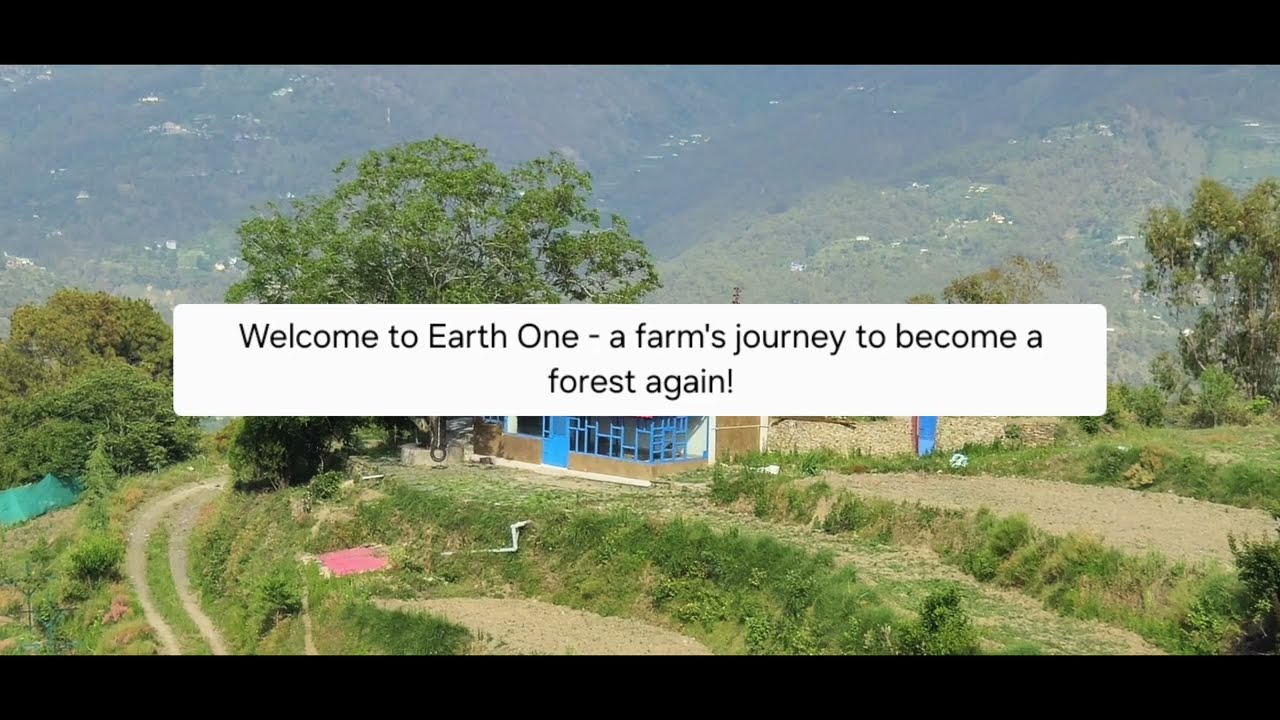
EA
EarthJust Ecosystems
Himachal Pradesh, India
Nonprofit, Community Group, BusinessEarthJust began in 2016 when its founders moved from consumption-led urban life to a zero-waste, mindful existence in the hills of Himachal Pradesh. What started as a personal reckoning with waste became a movement: live the change first, then invite others in. EarthJust spreads the joy of sustainability — moving people from Swayam (self) to Samudaya (community) to Samaj (systems). It's a place based movement, anchored in purpose, driven by poeple. Its work is not program delivery; it is the creation of spaces where people practise, connect, prototype, and then lead. Over a decade it has convened 500+ Samwaads, reached 70,000+ participants, trained 35 educator cohorts, planted 2,000+ trees, and grown a live demonstration place — Earth Farm — where regenerative practice is visible, replicable, and grounded in local knowledge.
Project story
Maanu spent hours on his knees, piecing together broken tiles into a mosaic on the floor of the bathroom at Earth Farm.
Not because he was asked to. Because he wanted it to be beautiful.
When he finished, he didn't call us. He called his family. Then the neighbours. He wanted them to see — this thing we usually throw away, this thing we call waste, this is what it can become.
That moment is Earth Farm in miniature.
Earth Farm sits in Ser Jagas, Sirmaur, in the mid-hills of Himachal Pradesh. Since 2022, EarthJust has been building a working farm here that doesn't separate ecology from economy, or demonstration from daily life. The farm cultivates fruits, grains, herbs, local millets, and traditional crops organically. A food and fodder forest provides feed for village animals, fuel wood for households, and habitat for wildlife. All structures are built from reclaimed and discarded materials — construction methods kept deliberately visible so neighbours can learn and replicate. There is a community walkway, a space for elders and children to wander through and engage. A play area for local youth.
And there is Maanu. Now, on any construction at the farm, he arrives with his own recommendations — ecobricks here, construction waste in the foundation there, broken glass sorted and reused. What once seemed like the eccentric dream of outsiders has become, in a few years, his own practice. His own pride.
He is not alone. A family lives on the farm, managing their own cow, growing their own vegetables, working as collaborators. Several neighbours — people who used to travel far for daily wage work — now work next to their own homes. Not as labour. As equals, as knowledge holders, as co-designers of what this place is becoming.
EarthLove — EarthJust’s food systems initiative — is woven into the farm’s ecology. Himachal Pradesh is home to dozens of native fruits — timru (Sichuan pepper), wild apricots, wild persimmon, wild figs, kafal, seabuckthorn — that are nutritionally extraordinary but commercially invisible. As smallholder farmers shift toward monoculture cash crops, these fruits are left to rot on the branch. Not because they aren’t good. Because there has been no market for them.
EarthLove changes that — quietly, practically, season by season. Surplus and short-shelf-life fruits from the farm and the surrounding forest are processed into clean-label jams, chutneys, and pickles using solar drying and natural preservation methods, through existing government food processing units. No new infrastructure. A model any hill village could, in principle, adopt. The men and youth of Ser Jagas are learning this process as co-producers, not as labour — building a livelihood skill that belongs to them.
A pilot in 2024, funded personally by EarthJust’s founders, produced 300+ jars and bottles from 400+ kg of fruit that would otherwise have been discarded. This funding round formalises what has already proved itself.
The Ecosystem We Work In
Himachal is a state where traditional knowledge of seeds, water, soil, and forest runs deep — and where economic pressure is pulling younger generations off the land. Monoculture is spreading. Elders with irreplaceable knowledge are not being heard. Earth Farm works in this gap: not as experts with solutions, but as neighbours who chose to stay, build, learn, and share.
The broader EarthJust ecosystem — EarthGreen (farm-forest practice), EarthCommunity (educator communities), EarthThink (policy dialogue), and EarthCatalyst (organisational incubation) — means that what is learned on the farm does not stay on the farm. It flows into schools, policy spaces, and other organisations through a network built over a decade.
2022
Farm established
1 acre+
Under cultivation
6+
Village families engaged
3
Practice zones
What This Funding Will Enable
A grant in this round will directly support:
Deepening and documenting the organic cultivation system — creating replicable models for local adoption
Expanding the food forest and fodder belt with locally appropriate species
Sustaining village employment and structured capacity-building for workers
Developing the community commons and youth play area as active engagement spaces
Documenting traditional knowledge held by village workers — creating a living archive
Producing accessible, local-language materials so other farms and communities can replicate what is being learned here
Formalising EarthLove — FSSAI certification, first documented production season, market exhibition presence, and fair wages for village co-producers
The funding ask is calibrated to the scale of impact, not the scale of ambition. A smaller grant sustains and documents what already exists. A larger grant allows expansion of the food forest and EarthLove product development, and the creation of materials that carry this model beyond this farm.
A Note for Reviewers
Earth Farm is not a pilot. It is a life in progress — built on the same principles EarthJust has held since 2016.
What makes it unusual is the insistence on not separating things that are usually kept apart: ecology and livelihood, demonstration and employment, traditional knowledge and new practice. A jar of wild apricot chutney or timru pickle can carry all of that — the soil, the season, the person who picked it — into a market that has never seen it before.
EarthJust has operated without external grants for most of its existence — sustained by earned income, community reciprocity, and the founders’ own choices about how to live. This application is not a signal of dependency; it is an invitation to amplify something that is already alive and growing.
The farm does not need to be rescued. It needs to be resourced.
The future is not built — it is grown.
What grows here, changes everywhere.
Project updates
Team
Location
India