The Mangrove Eco-Restoration Project
Kenya
Restoration, Education, Community$5,123
USDTotal funded by 55 donors with matching
YO
Youth Pawa
Kenya
NonprofitYouth Pawa is an organization dedicated to empowering youth to take action on critical environmental challenges, including nature restoration, ocean and environmental conservation, and climate justice. Our work directly supports the achievement of UN Sustainable Development Goals 13, 14, 15, and 17. We are guided by the belief that conservation is essential for the well-being of humanity and the planet, and we are committed to making a meaningful difference through youth-led initiatives. Our mission is to drive positive change for people and the planet through youth-led actions and advocacy that will enhance environmental sustainability and climate justice. The organization's vision centers on building a healthy and sustainable environment while educating youth about sustainable development and environmental stewardship.
OP
Open Collective Europe Foundation
Belgium
NonprofitOpen Collective Europe Foundation is a Belgian public utility foundation that provides fiscal hosting, grantmaking, and transparent fund administration for mission-aligned initiatives across Europe and beyond. We act as a legal and financial intermediary for hosted initiatives, helping them receive and manage funds, process expenses, and operate with strong financial controls while remaining distinct from the foundation itself. Our work supports open, civic, social-impact, and philanthropic projects through accountable infrastructure, transparent reporting, and practical operational support.
Project story
Having spent a third of my lifetime here at the coast, I have grown to love the Indian Ocean and the incredible marine biodiversity found within this space. The coastal and marine ecosystems are spectacular, but to me, mangrove ecosystems truly stand out. Their uniqueness and beauty prompted me to learn more about them. With each passing day, I came to deeply understand what these ecosystems mean to our lives here at the coast.
However, I also learned that despite all the benefits these mangroves give us, they are highly threatened. Seeing them cut down for wood fuel and timber without being replaced, alongside government land clearance for roads and bridges, made me realize this has become a severe menace. Coupled with these structural threats, the community lacked knowledge regarding the importance of these habitats. A critical lack of environmental awareness and widespread public indifference proved that immediate action had to be taken.
Problem Description:
Despite growing global recognition of the value of mangrove forests, they are still being destroyed across many areas of the Indian Ocean due to various socioeconomic and political pressures. In Kenya, mangroves are protected by law - most notably under the Forest Act but lax enforcement and strong financial incentives to reclaim land often result in deliberate destruction.
Escalating human pressure on mangrove populations and increasing quantities of pollutants reaching coastal and intracoastal waters have sparked renewed urgency regarding the role mangroves play in maintaining a healthy marine ecology. According to Kenya's National Forest Policy (2015), adjacent communities are legally obliged to be involved in managing the forests in their vicinity through a participatory forest management approach.
The most prominent gap in our landscape is inadequate community involvement in conserving and protecting the mangrove forests in the project area, accompanied by a lack of local commitment and support. As a result, deforestation rates in Kenya, including coastal forests, and mangroves specifically remain unsustainably high.
Our Approach:
We do not believe in fencing off nature or pushing people away. Instead, our project utilizes the Community-Based Ecological Mangrove Restoration (CBEMR) model. This practical approach intends to bring everyone on board, transforming every single community member into a dedicated steward of the environment.
Our strategy relies on a powerful, three-pronged system:
Habitat Restoration: Physically bringing degraded coastal land back to life using proven ecological science and direct community activations.
Community Education & Engagement: Running interactive workshops so the wider public understands mangroves and feels empowered to actively conserve and restore them.
Livelihood Support (Our Economic Pivot): We are introducing sustainable, community-led beekeeping inside the mangrove . Mangrove flowers produce world class honey. By providing households with hives and safety gear, we create a thriving green economy that aligns local survival with forest protection.
Our Timeline:
Over a 24-month timeframe, this project will achieve clear, measurable milestones to transform Mkupe Creek and share our data transparently:
Months 1 - 6: Site Mobilisation, Hive Deployment & First Progress Report
We will map out and prepare the targeted 30 hectares of degraded forest land.
We will build and place 150 new modern beehives across the creek, establishing sustainable honey businesses for 30 local households.
We will launch interactive 'Eco-Clubs' across 5 new local coastal schools to begin youth training.
Month 6 Milestone: Publish our first Semi-Annual Impact Report and Public Information-Sharing Session, detailing baseline soil metrics, seedling survival plans, and the official project launch data.
Months 7 - 12: First Wave Planting & Mid-Term Verification
We will host community planting days to establish native seedlings across the first 15 hectares of the restoration site.
School students will participate in hands-on seedling management workshops, directly connecting education to the land.
Month 12 Milestone: Publish our Year 1 Progress Report and Community Forum, verifying the survival rate of the first planting wave, hive health data, and household economic progress.
Months 13 - 18: Second Wave Planting & Honey Harvest
We will restore the remaining 15 hectares of the target zone, bringing our total to 30 hectares fully under restoration.
We will gather our very first community mangrove honey harvest, providing immediate income to our 30 partner households.
Month 18 Milestone: Publish our Third Semi-Annual Impact Report, sharing data on biodiversity return (fish/crab populations) and local school participation counts with supporters and partner networks.
Months 19 - 24: Market Access, Long-Term Monitoring & Final Project Sharing
We will set up a centralized honey processing and packaging hub using a portion of the honey profits, ensuring financial self-sustainability.
Our community monitoring teams will continuously track tree growth and ecosystem health.
Month 24 Milestone: Release our final 24-Month Project Impact Report and Open-Source Knowledge Package, sharing lessons learned, verified ecological data, and our scalable framework with the broader global conservation community.
Our Community:
Our work is entirely built on local roots. We already operate deep within Miritini, having spent years building a foundation of absolute trust with local households who are eager to lead this work.
To ensure long-term protection, we are partnering closely with the local Beach Management Unit (BMU) and community elders, who have committed to protecting the restored zones from future illegal cutting. Supporters and local families have responded with immense enthusiasm because this project offers a rare, hopeful double-win: it restores the marine biodiversity they depend on while putting reliable food on their tables.
Project updates
Team
Donations (55)
The Mangrove Eco-Restoration Project
Kenya
Restoration, Education, Community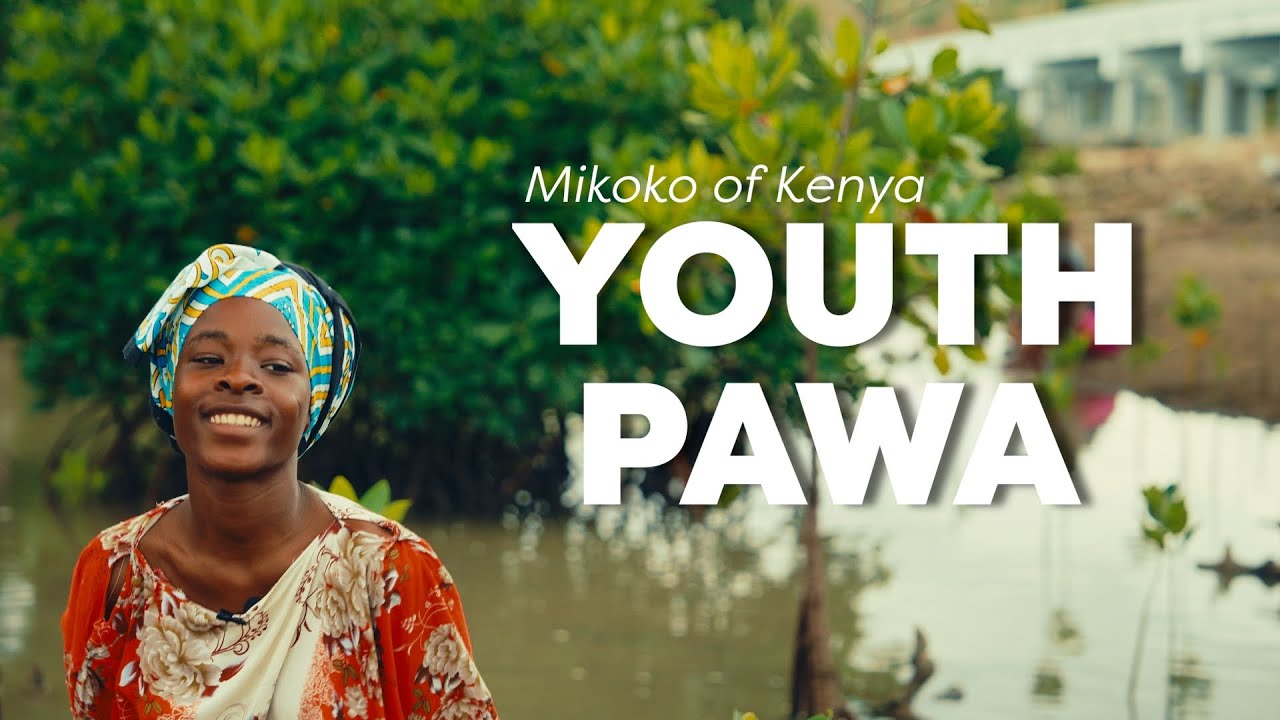
YO
Youth Pawa
Kenya
NonprofitYouth Pawa is an organization dedicated to empowering youth to take action on critical environmental challenges, including nature restoration, ocean and environmental conservation, and climate justice. Our work directly supports the achievement of UN Sustainable Development Goals 13, 14, 15, and 17. We are guided by the belief that conservation is essential for the well-being of humanity and the planet, and we are committed to making a meaningful difference through youth-led initiatives. Our mission is to drive positive change for people and the planet through youth-led actions and advocacy that will enhance environmental sustainability and climate justice. The organization's vision centers on building a healthy and sustainable environment while educating youth about sustainable development and environmental stewardship.
OP
Open Collective Europe Foundation
Belgium
NonprofitOpen Collective Europe Foundation is a Belgian public utility foundation that provides fiscal hosting, grantmaking, and transparent fund administration for mission-aligned initiatives across Europe and beyond. We act as a legal and financial intermediary for hosted initiatives, helping them receive and manage funds, process expenses, and operate with strong financial controls while remaining distinct from the foundation itself. Our work supports open, civic, social-impact, and philanthropic projects through accountable infrastructure, transparent reporting, and practical operational support.
Project story
Having spent a third of my lifetime here at the coast, I have grown to love the Indian Ocean and the incredible marine biodiversity found within this space. The coastal and marine ecosystems are spectacular, but to me, mangrove ecosystems truly stand out. Their uniqueness and beauty prompted me to learn more about them. With each passing day, I came to deeply understand what these ecosystems mean to our lives here at the coast.
However, I also learned that despite all the benefits these mangroves give us, they are highly threatened. Seeing them cut down for wood fuel and timber without being replaced, alongside government land clearance for roads and bridges, made me realize this has become a severe menace. Coupled with these structural threats, the community lacked knowledge regarding the importance of these habitats. A critical lack of environmental awareness and widespread public indifference proved that immediate action had to be taken.
Problem Description:
Despite growing global recognition of the value of mangrove forests, they are still being destroyed across many areas of the Indian Ocean due to various socioeconomic and political pressures. In Kenya, mangroves are protected by law - most notably under the Forest Act but lax enforcement and strong financial incentives to reclaim land often result in deliberate destruction.
Escalating human pressure on mangrove populations and increasing quantities of pollutants reaching coastal and intracoastal waters have sparked renewed urgency regarding the role mangroves play in maintaining a healthy marine ecology. According to Kenya's National Forest Policy (2015), adjacent communities are legally obliged to be involved in managing the forests in their vicinity through a participatory forest management approach.
The most prominent gap in our landscape is inadequate community involvement in conserving and protecting the mangrove forests in the project area, accompanied by a lack of local commitment and support. As a result, deforestation rates in Kenya, including coastal forests, and mangroves specifically remain unsustainably high.
Our Approach:
We do not believe in fencing off nature or pushing people away. Instead, our project utilizes the Community-Based Ecological Mangrove Restoration (CBEMR) model. This practical approach intends to bring everyone on board, transforming every single community member into a dedicated steward of the environment.
Our strategy relies on a powerful, three-pronged system:
Habitat Restoration: Physically bringing degraded coastal land back to life using proven ecological science and direct community activations.
Community Education & Engagement: Running interactive workshops so the wider public understands mangroves and feels empowered to actively conserve and restore them.
Livelihood Support (Our Economic Pivot): We are introducing sustainable, community-led beekeeping inside the mangrove . Mangrove flowers produce world class honey. By providing households with hives and safety gear, we create a thriving green economy that aligns local survival with forest protection.
Our Timeline:
Over a 24-month timeframe, this project will achieve clear, measurable milestones to transform Mkupe Creek and share our data transparently:
Months 1 - 6: Site Mobilisation, Hive Deployment & First Progress Report
We will map out and prepare the targeted 30 hectares of degraded forest land.
We will build and place 150 new modern beehives across the creek, establishing sustainable honey businesses for 30 local households.
We will launch interactive 'Eco-Clubs' across 5 new local coastal schools to begin youth training.
Month 6 Milestone: Publish our first Semi-Annual Impact Report and Public Information-Sharing Session, detailing baseline soil metrics, seedling survival plans, and the official project launch data.
Months 7 - 12: First Wave Planting & Mid-Term Verification
We will host community planting days to establish native seedlings across the first 15 hectares of the restoration site.
School students will participate in hands-on seedling management workshops, directly connecting education to the land.
Month 12 Milestone: Publish our Year 1 Progress Report and Community Forum, verifying the survival rate of the first planting wave, hive health data, and household economic progress.
Months 13 - 18: Second Wave Planting & Honey Harvest
We will restore the remaining 15 hectares of the target zone, bringing our total to 30 hectares fully under restoration.
We will gather our very first community mangrove honey harvest, providing immediate income to our 30 partner households.
Month 18 Milestone: Publish our Third Semi-Annual Impact Report, sharing data on biodiversity return (fish/crab populations) and local school participation counts with supporters and partner networks.
Months 19 - 24: Market Access, Long-Term Monitoring & Final Project Sharing
We will set up a centralized honey processing and packaging hub using a portion of the honey profits, ensuring financial self-sustainability.
Our community monitoring teams will continuously track tree growth and ecosystem health.
Month 24 Milestone: Release our final 24-Month Project Impact Report and Open-Source Knowledge Package, sharing lessons learned, verified ecological data, and our scalable framework with the broader global conservation community.
Our Community:
Our work is entirely built on local roots. We already operate deep within Miritini, having spent years building a foundation of absolute trust with local households who are eager to lead this work.
To ensure long-term protection, we are partnering closely with the local Beach Management Unit (BMU) and community elders, who have committed to protecting the restored zones from future illegal cutting. Supporters and local families have responded with immense enthusiasm because this project offers a rare, hopeful double-win: it restores the marine biodiversity they depend on while putting reliable food on their tables.
Project updates
Team
This project was part of Round 3
$5,123
USDTotal funded by
Activity
Location
Kenya
This project was part of
Round 3
Jul 1-21, 2026
Supporting community-led nature projects around the world.
Matching funds provided by


