Community Food Forest & Off-Grid Living at Light Forest World/ Chiang Mai
LI
Light Forest World
Thailand
OtherLight Forest World is a platform for personal and planetary regeneration, rooted in rebuilding our relationship with the Earth, created by Dev Lewis. Through podcasts, writing, community building, and in-person gatherings, we help people who sense we are living through a paradigm shift — across AI and climate, spirituality and food — move away from a 'Dark Forest' culture of extraction and fear toward a 'Light Forest' rooted in regeneration and consciousness
Project story
I'm Dev. Chiang Mai has been home for four years, and in 2024 I founded Light Forest World here — a platform for systems change rooted in rebuilding our relationship with the Earth. My work draws on unlikely webs across tech policy, geopolitics, Futures, Web3, Chinese and Southeast Asian culture, spirituality, and ecology.
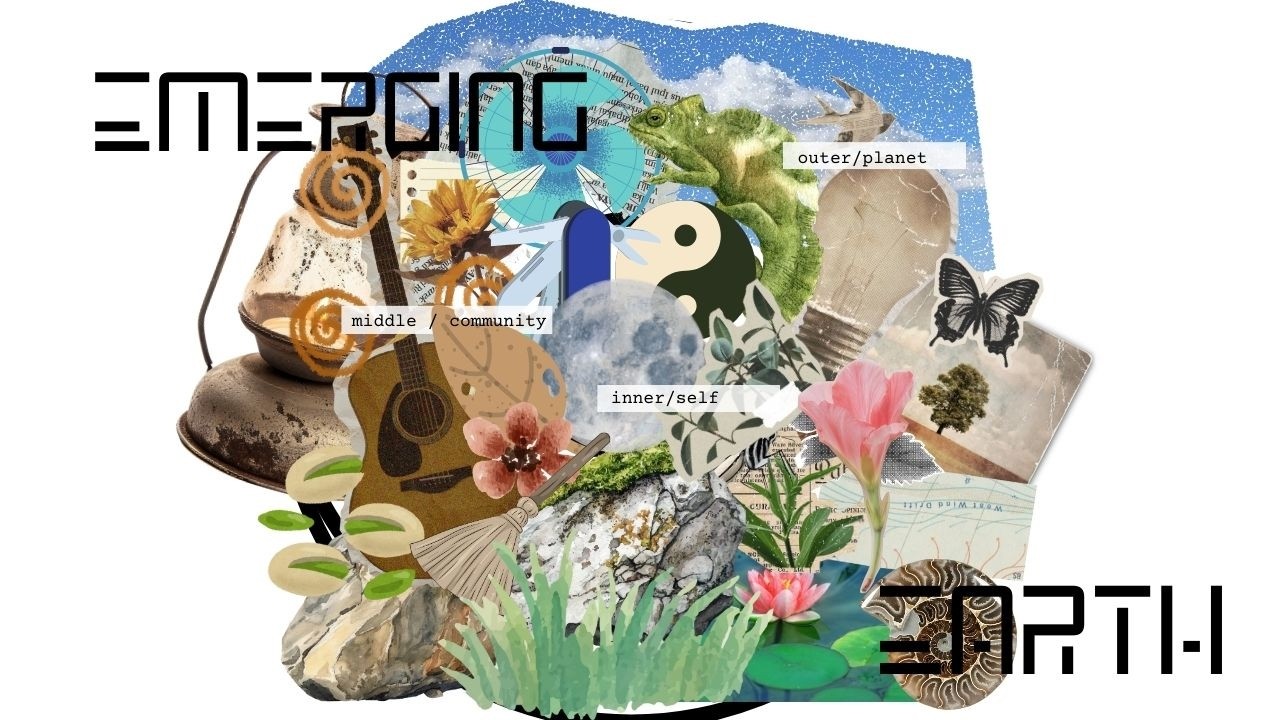
Light Forest began as a podcast to learn from those already walking this path, growing to host workshops and Emerging Earth gatherings designed to combine intellect with intuition — intentionally weaving relationship with land into the program. With collaborators, we built a network we called Cosmo-Local Chiang Mai, connecting people playing their part in regeneration. The work found support: recognized by TEDx Chiang Mai 2025, and supported through small grants from the School of Public Policy at Chiang Mai University and the Gitcoin Asia round.
These gatherings were deeply place-based — but they had no single piece of land to return to, to root in, to tend over time. My intuition kept pointing to the same next step: the work wanted ground. I've come to sense a real yearning — in myself and in the people I meet — for spaces that feed our intellectual hunger and imagination and our embodied connection: intuition, hands in the soil, bodies relearning how to live with the Earth. Light Forest HQ is where I envision those two halves finally meet.
In 2025 I took a long-term lease on roughly one rai of land bordering Doi Suthep-Pui National Park. It had sat uncultivated for fifteen years with bare, weed-covered, tired soil, but alive at the edges, fed by the forest beside it. Last year I planted my first banana trees and a few beds of corn and tomato. It was the first time in my life I'd grown anything edible, and it thrived almost on its own. That was my proof.
Banana Trees Planted in 2025 now grown
African Togo Tomatoes
The part of the land for the Food Forest
The Project: Over 18 months we will transform this piece of land (1 rai or half an acre in entirety) into community food forest. establishing ~50 fruit and support trees across 15+ varieties, building toward 40+ edible and medicinal species in a dense, layered, self-sustaining system. Around 80% of plantings are edible, the rest medicinal and timber.
We will also build an community-built earthen structure / learning shelter that serves as a physical space for community gathering.
The “Community” comes in both as a way to plant and grow the forest, through several “skill building” and inner transformation workshops and residencies, and to serve the community by offering the food as a commons to be managed collaboratively by the people that spend time creating it and caring for it. My intention is for this to serve both the people that created it, but also the neighbouring villages, who may be more economically disadvantaged by rising food prices.
COMMUNITY & TEAM
The food forest is built by community. I'll run 2–3 hands-on planting residencies as part of a series of residencies focussed on off-grid skill building for urban professionals.
This will be in partnership with Tanya Meftah / Wholistik Permaculture — who founded Vietnam's first urban-gardening social enterprise (Green Youth Collective: 100+ workshops, 10,000+ m² planted) — teaching composting, natural fertilizers, heirloom growing and seed-saving as we plant. Shorter 1–2 day community days bring in dozens more hands. We partner with Panya Forest (Greg & Ramphai), to co-host gatherings. We will also partner with Chiang Mai City’s Food Lab created in 2022 to address food shortages faced by disadvantaged groups around Chiang Mai. We also also draw on the Cosmo-Local Chiang Mai network I've been co-convening since 2024, Cosmo-Local Chiang Mai network -, Potent Fungi, Living Roots, Panya Seed, Nomad Turtle, Natalie Limwatana, Michel Bauwens, among others.
TIMELINE
In the 2nd half of 2026 I will plan to do some more planting on my own with one residency with Tanya to experiment with our methodology.
Months 1–3 (dry season): site prep — chop-and-drop weeds into mulch, cut contour swales, plant cover crops/nitrogen-fixers, set up nursery + compost. Dig plot for earthen home First planting residency.
Months 4–8 (2027 monsoon, May–Sept): main planting window — ~50 trees + understory go in on rain-season water. Second residency.
Months 9–14: guild + ground layer (coffee, cacao, ginger, turmeric, herbs, medicinals); first banana/papaya/greens harvests.Community-built earthen gathering shelter raised during a residency (on-site earth, community labor).
Months 15–18: survival monitoring, soil retest. third residency -creating food commons bank and open-source methodology for our residency and building method.
PROJECT IN NUMBERS1 rai regenerated from 15-year fallow into active food forest
~50 trees · 15+ fruit varieties · ~40 edible + medicinal species
target ≥ 70% tree survival at 18 months
2–3 planting residencies · ~40–50 participants · + community-day volunteers
soil organic matter: baseline → retest at 18 months
1 earthen shelter build for community gatherings.
WHY NOW / PHASE 1
Our mainstream food systems are more fragile than ever and by the time this fundraising round begins food prices may raise further with uncertainty around climate related impacts too. More people will suffer from food shortages, and more people will realise that the old way of living in cities, reliant on large scale food systems, is not sustainable anymore. Urban people in Asia especially need to learn the skills and knowledge to make this shift.
This is Phase 1. Beyond this first phase, Light Forest HQ becomes a living school: an earthen building, off-grid solar, longer Emerging Earth gatherings that pair earth-skills with futures work, and an open-sourced methodology other communities can use. If Phase 1 succeeds, I'll raise to build that out from other sources.
Project updates
Team
LI
Light Forest World
Thailand
OtherLight Forest World is a platform for personal and planetary regeneration, rooted in rebuilding our relationship with the Earth, created by Dev Lewis. Through podcasts, writing, community building, and in-person gatherings, we help people who sense we are living through a paradigm shift — across AI and climate, spirituality and food — move away from a 'Dark Forest' culture of extraction and fear toward a 'Light Forest' rooted in regeneration and consciousness
Project story
I'm Dev. Chiang Mai has been home for four years, and in 2024 I founded Light Forest World here — a platform for systems change rooted in rebuilding our relationship with the Earth. My work draws on unlikely webs across tech policy, geopolitics, Futures, Web3, Chinese and Southeast Asian culture, spirituality, and ecology.
Light Forest began as a podcast to learn from those already walking this path, growing to host workshops and Emerging Earth gatherings designed to combine intellect with intuition — intentionally weaving relationship with land into the program. With collaborators, we built a network we called Cosmo-Local Chiang Mai, connecting people playing their part in regeneration. The work found support: recognized by TEDx Chiang Mai 2025, and supported through small grants from the School of Public Policy at Chiang Mai University and the Gitcoin Asia round.
These gatherings were deeply place-based — but they had no single piece of land to return to, to root in, to tend over time. My intuition kept pointing to the same next step: the work wanted ground. I've come to sense a real yearning — in myself and in the people I meet — for spaces that feed our intellectual hunger and imagination and our embodied connection: intuition, hands in the soil, bodies relearning how to live with the Earth. Light Forest HQ is where I envision those two halves finally meet.
In 2025 I took a long-term lease on roughly one rai of land bordering Doi Suthep-Pui National Park. It had sat uncultivated for fifteen years with bare, weed-covered, tired soil, but alive at the edges, fed by the forest beside it. Last year I planted my first banana trees and a few beds of corn and tomato. It was the first time in my life I'd grown anything edible, and it thrived almost on its own. That was my proof.
Banana Trees Planted in 2025 now grown
African Togo Tomatoes
The part of the land for the Food Forest
The Project: Over 18 months we will transform this piece of land (1 rai or half an acre in entirety) into community food forest. establishing ~50 fruit and support trees across 15+ varieties, building toward 40+ edible and medicinal species in a dense, layered, self-sustaining system. Around 80% of plantings are edible, the rest medicinal and timber.
We will also build an community-built earthen structure / learning shelter that serves as a physical space for community gathering.
The “Community” comes in both as a way to plant and grow the forest, through several “skill building” and inner transformation workshops and residencies, and to serve the community by offering the food as a commons to be managed collaboratively by the people that spend time creating it and caring for it. My intention is for this to serve both the people that created it, but also the neighbouring villages, who may be more economically disadvantaged by rising food prices.
COMMUNITY & TEAM
The food forest is built by community. I'll run 2–3 hands-on planting residencies as part of a series of residencies focussed on off-grid skill building for urban professionals.
This will be in partnership with Tanya Meftah / Wholistik Permaculture — who founded Vietnam's first urban-gardening social enterprise (Green Youth Collective: 100+ workshops, 10,000+ m² planted) — teaching composting, natural fertilizers, heirloom growing and seed-saving as we plant. Shorter 1–2 day community days bring in dozens more hands. We partner with Panya Forest (Greg & Ramphai), to co-host gatherings. We will also partner with Chiang Mai City’s Food Lab created in 2022 to address food shortages faced by disadvantaged groups around Chiang Mai. We also also draw on the Cosmo-Local Chiang Mai network I've been co-convening since 2024, Cosmo-Local Chiang Mai network -, Potent Fungi, Living Roots, Panya Seed, Nomad Turtle, Natalie Limwatana, Michel Bauwens, among others.
TIMELINE
In the 2nd half of 2026 I will plan to do some more planting on my own with one residency with Tanya to experiment with our methodology.
Months 1–3 (dry season): site prep — chop-and-drop weeds into mulch, cut contour swales, plant cover crops/nitrogen-fixers, set up nursery + compost. Dig plot for earthen home First planting residency.
Months 4–8 (2027 monsoon, May–Sept): main planting window — ~50 trees + understory go in on rain-season water. Second residency.
Months 9–14: guild + ground layer (coffee, cacao, ginger, turmeric, herbs, medicinals); first banana/papaya/greens harvests.Community-built earthen gathering shelter raised during a residency (on-site earth, community labor).
Months 15–18: survival monitoring, soil retest. third residency -creating food commons bank and open-source methodology for our residency and building method.
PROJECT IN NUMBERS1 rai regenerated from 15-year fallow into active food forest
~50 trees · 15+ fruit varieties · ~40 edible + medicinal species
target ≥ 70% tree survival at 18 months
2–3 planting residencies · ~40–50 participants · + community-day volunteers
soil organic matter: baseline → retest at 18 months
1 earthen shelter build for community gatherings.
WHY NOW / PHASE 1
Our mainstream food systems are more fragile than ever and by the time this fundraising round begins food prices may raise further with uncertainty around climate related impacts too. More people will suffer from food shortages, and more people will realise that the old way of living in cities, reliant on large scale food systems, is not sustainable anymore. Urban people in Asia especially need to learn the skills and knowledge to make this shift.
This is Phase 1. Beyond this first phase, Light Forest HQ becomes a living school: an earthen building, off-grid solar, longer Emerging Earth gatherings that pair earth-skills with futures work, and an open-sourced methodology other communities can use. If Phase 1 succeeds, I'll raise to build that out from other sources.
Project updates
Team
Location
Thailand