Periferia Sustentável: Regenerative Futures from São Paulo's Urban Edge
$5,202
USDTotal funded by 48 donors with matching
IN
Instituto Favela da Paz
Brazil
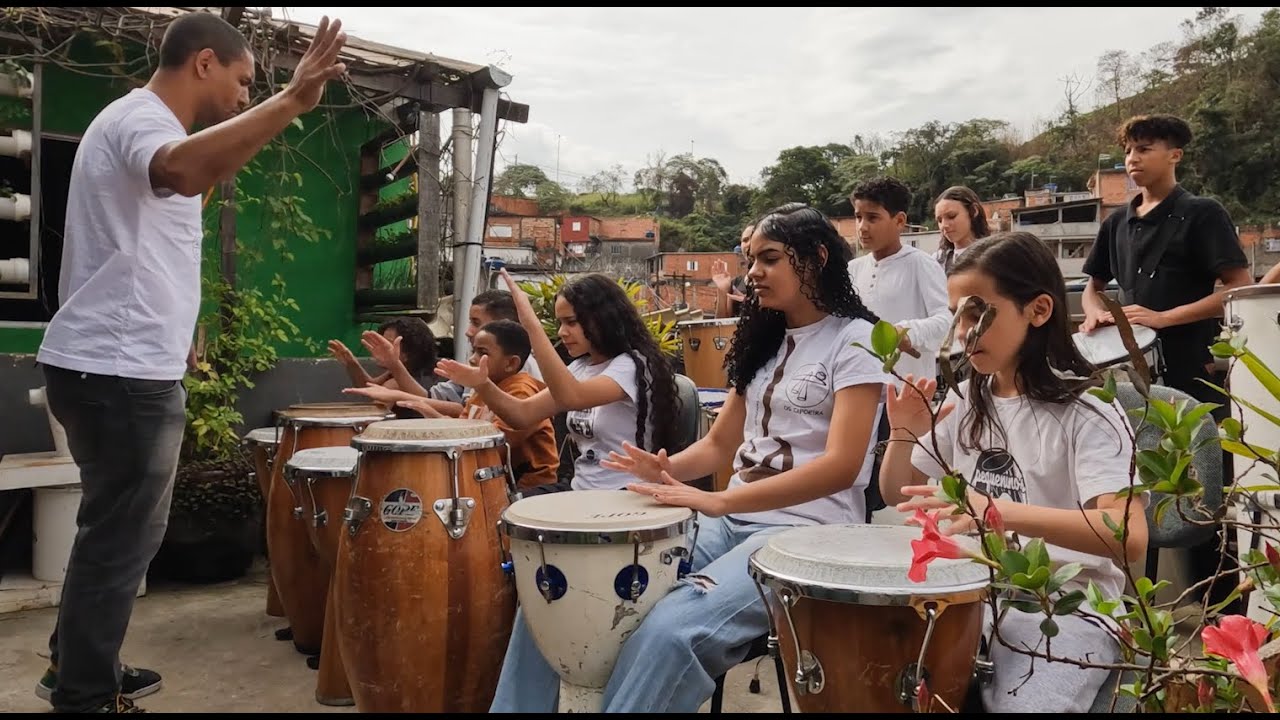
Nonprofit, Community GroupThe Favela da Paz Institute is a non-profit based in Jardim Nakamura, on the southern periphery of São Paulo, Brazil, with nearly 40 years of history. Founded by members of the band Poesia Samba Soul — musicians born and raised in the community — we grew from a music collective into a hub for culture, education, sustainability, health, technology, and community care. Today we are an intergenerational team of artists, educators, organizers, and community leaders running more than a dozen projects: Favela Solar (community-owned clean energy), VegeArte (community kitchen and solar cooking), samba schools, youth art programs, a community care network, and more. More than an organization, we are a living relational space rooted in creativity, regeneration, and deep trust. Our vision: that urban peripheries can become examples of regenerative, community-based futures.
Project story
In Jardim Nakamura, on the southern edge of São Paulo, the Favela da Paz Institute has spent nearly four decades transforming a neighborhood once marked by violence and exclusion into a living example of community-based regeneration. Periferia Sustentável (Sustainable Periphery) is the regenerative-technology arm of this work — our answer to the question that defines our context: what does climate action look like in the urban periphery?
The ecosystem we work in. We live where the Atlantic Forest meets the city, in one of the most densely populated and environmentally stressed urban regions in Latin America. Rivers run buried beneath concrete, heat islands punish low-income housing, and the families hit first and hardest by the climate crisis — Black, brown, working-class, migrant — are the same families almost entirely absent from mainstream climate solutions. The favela is both a frontline of climate vulnerability and a laboratory of everyday regeneration.
What we do. Through hands-on education, open-source tools, and mobile laboratories, Periferia Sustentável expands grassroots access to regenerative technologies. The project brings together three interconnected initiatives:
Favela Solar — a community-owned solar microgeneration system that already supplies clean, affordable energy to 20 families, lowering bills and emissions while building local technical capacity.
VegeArte — a community kitchen and nutritional-education program that promotes plant-based food, food sovereignty, and solar cooking.
Mobile Labs & Open-Source Workshops — practical training in solar energy, water harvesting, agroecology, and low-cost regenerative tools, designed to be replicated across other peripheries.
Why it matters. Each initiative is modest on its own; together they form a working model of how a neighborhood can become its own climate infrastructure. We are not waiting for solutions to arrive from outside — we are building them, sharing them open-source, and weaving them into the cultural, educational, and care ecosystems that already sustain our community (samba schools, youth art programs, the Bem Me Quero care network, Atelier da Vovó). Regeneration here is not a single project; it is the way our community already chooses to live.
Our long horizon. Periferia Sustentável is a building block of a larger vision: a Favela University — an intergenerational, periphery-rooted learning space that treats the favela itself as a teacher of regenerative futures. We believe the most powerful regenerative futures are being imagined and built by the communities the climate crisis has hit hardest.
Project updates
Team
IN
Instituto Favela da Paz
Brazil
Nonprofit, Community GroupThe Favela da Paz Institute is a non-profit based in Jardim Nakamura, on the southern periphery of São Paulo, Brazil, with nearly 40 years of history. Founded by members of the band Poesia Samba Soul — musicians born and raised in the community — we grew from a music collective into a hub for culture, education, sustainability, health, technology, and community care. Today we are an intergenerational team of artists, educators, organizers, and community leaders running more than a dozen projects: Favela Solar (community-owned clean energy), VegeArte (community kitchen and solar cooking), samba schools, youth art programs, a community care network, and more. More than an organization, we are a living relational space rooted in creativity, regeneration, and deep trust. Our vision: that urban peripheries can become examples of regenerative, community-based futures.
Project story
In Jardim Nakamura, on the southern edge of São Paulo, the Favela da Paz Institute has spent nearly four decades transforming a neighborhood once marked by violence and exclusion into a living example of community-based regeneration. Periferia Sustentável (Sustainable Periphery) is the regenerative-technology arm of this work — our answer to the question that defines our context: what does climate action look like in the urban periphery?
The ecosystem we work in. We live where the Atlantic Forest meets the city, in one of the most densely populated and environmentally stressed urban regions in Latin America. Rivers run buried beneath concrete, heat islands punish low-income housing, and the families hit first and hardest by the climate crisis — Black, brown, working-class, migrant — are the same families almost entirely absent from mainstream climate solutions. The favela is both a frontline of climate vulnerability and a laboratory of everyday regeneration.
What we do. Through hands-on education, open-source tools, and mobile laboratories, Periferia Sustentável expands grassroots access to regenerative technologies. The project brings together three interconnected initiatives:
Favela Solar — a community-owned solar microgeneration system that already supplies clean, affordable energy to 20 families, lowering bills and emissions while building local technical capacity.
VegeArte — a community kitchen and nutritional-education program that promotes plant-based food, food sovereignty, and solar cooking.
Mobile Labs & Open-Source Workshops — practical training in solar energy, water harvesting, agroecology, and low-cost regenerative tools, designed to be replicated across other peripheries.
Why it matters. Each initiative is modest on its own; together they form a working model of how a neighborhood can become its own climate infrastructure. We are not waiting for solutions to arrive from outside — we are building them, sharing them open-source, and weaving them into the cultural, educational, and care ecosystems that already sustain our community (samba schools, youth art programs, the Bem Me Quero care network, Atelier da Vovó). Regeneration here is not a single project; it is the way our community already chooses to live.
Our long horizon. Periferia Sustentável is a building block of a larger vision: a Favela University — an intergenerational, periphery-rooted learning space that treats the favela itself as a teacher of regenerative futures. We believe the most powerful regenerative futures are being imagined and built by the communities the climate crisis has hit hardest.
Project updates
Team
This project was part of Round 3
$5,202
USDTotal funded by
Activity
Location
Brazil
This project was part of
Round 3
Jul 1-21, 2026
Supporting community-led nature projects around the world.
Matching funds provided by


