Restoring Sundarbans mangroves, rebuilding tiger-widow livelihoods
West Bengal, India
Restoration, Community, EducationGR
Green Hope Foundation
Ontario, Canada
NonprofitGreen Hope Foundation is an ECOSOC-accredited youth-led Not-for-Profit. It is headquartered in Canada and has operations in 28 countries with an outreach of over half a million people. The organization was founded by Kehkashan Basu, M.S.M., MBA , a UNCCD Land Hero at the age of 12 in 2012. The anthropogenic impacts of climate change and biodiversity loss disproportionately affect regions and communities least responsible for it. Green Hope Foundation’s actions are therefore driven through a human and planetary lens, built on the pillars of empathy, compassion and collaboration. The issues that we focus on are Climate Action, Land Degradation, Clean Water & Sanitation, Sustainable Consumption and Production, Biodiversity Conservation, Clean Energy and rebuilding better for a sustainable future.
Project story
Green Hope Foundation: Restoring Ecosystems, Rebuilding Lives
Green Hope Foundation is a UN ECOSOC–accredited and UNCCD‑accredited civil society organization founded on the belief that environmental restoration must advance both ecological balance and social justice. Our founder, a UNCCD Land Hero, established the organization to empower frontline communities to become custodians of their own landscapes.
In the Indian Sundarbans—one of the world’s most climate‑vulnerable ecosystems— climate change is devastating both nature and people. Rising seas, fierce cyclones, and creeping salinity have destroyed the mangrove forests that once protected communities—and the livelihoods they depend on. The human cost runs deeper: hundreds of women, widowed by tiger attacks, face crushing social and economic isolation. One such community, Chargheri Village, faces rising seas, cyclonic storms, salinity intrusion, and rapid mangrove degradation. Loss of mangrove buffers has intensified erosion, reduced fisheries, and increased human–tiger conflict, pushing already marginalized families into deeper precarity.
Our community‑led model uniquely addresses this challenge by placing Indigenous communities, especially tiger widows, at the center of restoration. These women, often socially excluded after losing spouses to tiger attacks, are trained in mangrove nursery development, planting, monitoring, and eco‑enterprise creation. This restores both ecosystems and dignity.
By regenerating native mangroves, strengthening blue carbon sinks, and creating sustainable livelihoods, our approach rebuilds natural coastal defenses while ensuring long‑term community ownership. This fusion of ecological restoration, gender justice, and grassroots leadership makes our model both transformative and deeply resilient.
Green Hope Foundation is changing this story.
Working in Chargheri Village on Satjelia Island, we're proving that environmental restoration and human dignity aren't separate goals—they're inseparable. Through community-led nurseries and native-species planting, we've regenerated 258 hectares of mangrove ecosystems and planted over 18,000 saplings. Simultaneously, 200 tiger-widow families now lead thriving sustainable aquaculture enterprises, creating stable incomes while reducing pressure on forests.
Local women are becoming ecological guardians. Restored waterways are becoming pathways to resilience. Healing the land heals the community.
Your support will expand these community nurseries, restore more vulnerable zones, and unlock greater livelihood opportunities—ensuring that people and planet truly thrive together.
Project updates
Team
Restoring Sundarbans mangroves, rebuilding tiger-widow livelihoods
West Bengal, India
Restoration, Community, Education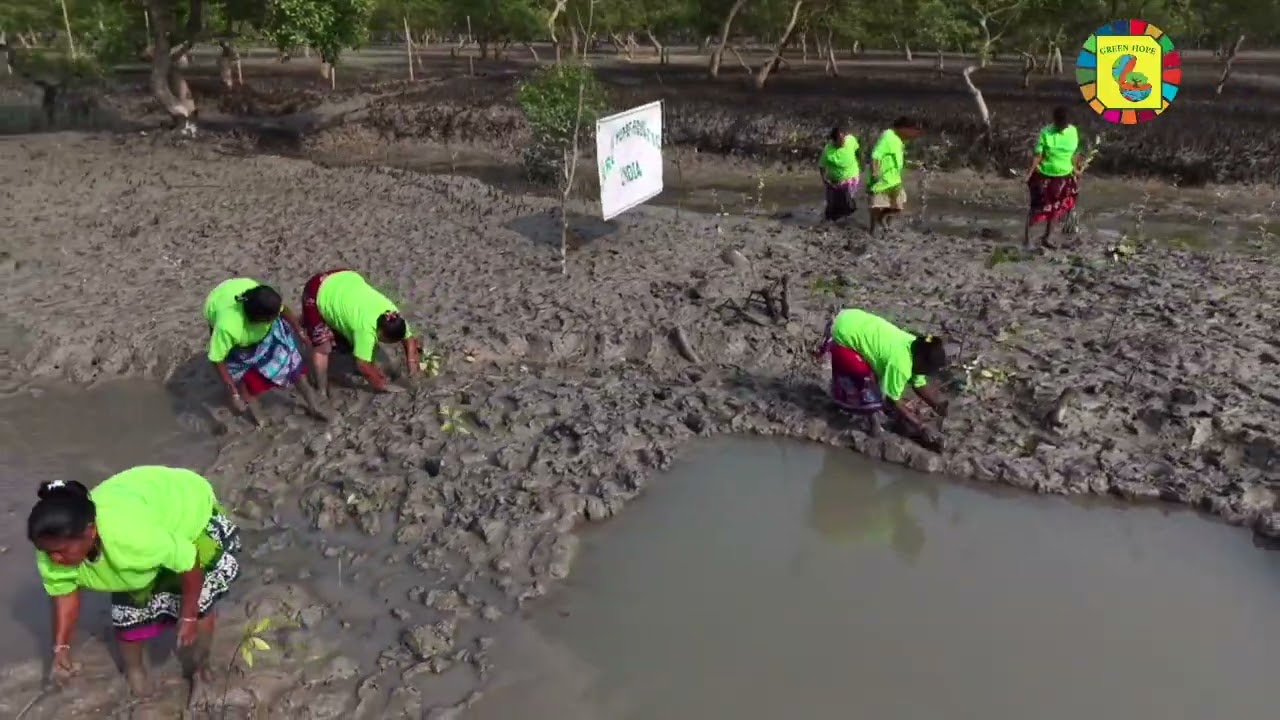
GR
Green Hope Foundation
Ontario, Canada
NonprofitGreen Hope Foundation is an ECOSOC-accredited youth-led Not-for-Profit. It is headquartered in Canada and has operations in 28 countries with an outreach of over half a million people. The organization was founded by Kehkashan Basu, M.S.M., MBA , a UNCCD Land Hero at the age of 12 in 2012. The anthropogenic impacts of climate change and biodiversity loss disproportionately affect regions and communities least responsible for it. Green Hope Foundation’s actions are therefore driven through a human and planetary lens, built on the pillars of empathy, compassion and collaboration. The issues that we focus on are Climate Action, Land Degradation, Clean Water & Sanitation, Sustainable Consumption and Production, Biodiversity Conservation, Clean Energy and rebuilding better for a sustainable future.
Project story
Green Hope Foundation: Restoring Ecosystems, Rebuilding Lives
Green Hope Foundation is a UN ECOSOC–accredited and UNCCD‑accredited civil society organization founded on the belief that environmental restoration must advance both ecological balance and social justice. Our founder, a UNCCD Land Hero, established the organization to empower frontline communities to become custodians of their own landscapes.
In the Indian Sundarbans—one of the world’s most climate‑vulnerable ecosystems— climate change is devastating both nature and people. Rising seas, fierce cyclones, and creeping salinity have destroyed the mangrove forests that once protected communities—and the livelihoods they depend on. The human cost runs deeper: hundreds of women, widowed by tiger attacks, face crushing social and economic isolation. One such community, Chargheri Village, faces rising seas, cyclonic storms, salinity intrusion, and rapid mangrove degradation. Loss of mangrove buffers has intensified erosion, reduced fisheries, and increased human–tiger conflict, pushing already marginalized families into deeper precarity.
Our community‑led model uniquely addresses this challenge by placing Indigenous communities, especially tiger widows, at the center of restoration. These women, often socially excluded after losing spouses to tiger attacks, are trained in mangrove nursery development, planting, monitoring, and eco‑enterprise creation. This restores both ecosystems and dignity.
By regenerating native mangroves, strengthening blue carbon sinks, and creating sustainable livelihoods, our approach rebuilds natural coastal defenses while ensuring long‑term community ownership. This fusion of ecological restoration, gender justice, and grassroots leadership makes our model both transformative and deeply resilient.
Green Hope Foundation is changing this story.
Working in Chargheri Village on Satjelia Island, we're proving that environmental restoration and human dignity aren't separate goals—they're inseparable. Through community-led nurseries and native-species planting, we've regenerated 258 hectares of mangrove ecosystems and planted over 18,000 saplings. Simultaneously, 200 tiger-widow families now lead thriving sustainable aquaculture enterprises, creating stable incomes while reducing pressure on forests.
Local women are becoming ecological guardians. Restored waterways are becoming pathways to resilience. Healing the land heals the community.
Your support will expand these community nurseries, restore more vulnerable zones, and unlock greater livelihood opportunities—ensuring that people and planet truly thrive together.
Project updates
Team
Location
West Bengal, India