Healing Appalachia with Bison
Tiffany Pyette is the co-Executive Director of the Appalachian Rekindling Project.
Show Notes
Topics
In eastern Kentucky, on land that was strip-mined and slated to become a $55 million federal prison with a labor camp, something entirely different is taking root. Tiffany Pyette, co-founder and co-executive director of the Appalachian Rekindling Project, shares the story of how her organization quietly raised the money to purchase 63 acres out from under the Bureau of Prisons and is now preparing to bring bison home to central Appalachia for the first time in generations.
Pyette, who is of Cherokee descent and grew up on both sides of the same Appalachian mountains, describes bison as ecosystem engineers whose simple presence begins to heal damaged land. Their ridged hooves break up compacted soil. Their wallowing creates habitat for insects, plants, and endangered species. Their shedding fur insulates bird nests at precisely the right temperature. A similar reintroduction in Romania's mountains increased forest carbon storage by 10 percent. On land the federal government had written off as ruined beyond repair, Pyette and co-executive director Tesa Devon see something worth rekindling.
The conversation moves through the organization's consensus-based, indigenous women-led governance model, the concept of rematriation as distinct from repatriation, and the unexpected local alliances that have formed around the project, including neighbors who paid for roadside billboards reading "Bison Belong Here." Pyette also explores why healthy ecosystems require human participation, pushing back against conservation models that separate people from land. The session closes with a Q&A touching on invasive species management, knowledge sharing, and what a replicable model for mountaintop removal restoration could look like.
Resources
Related
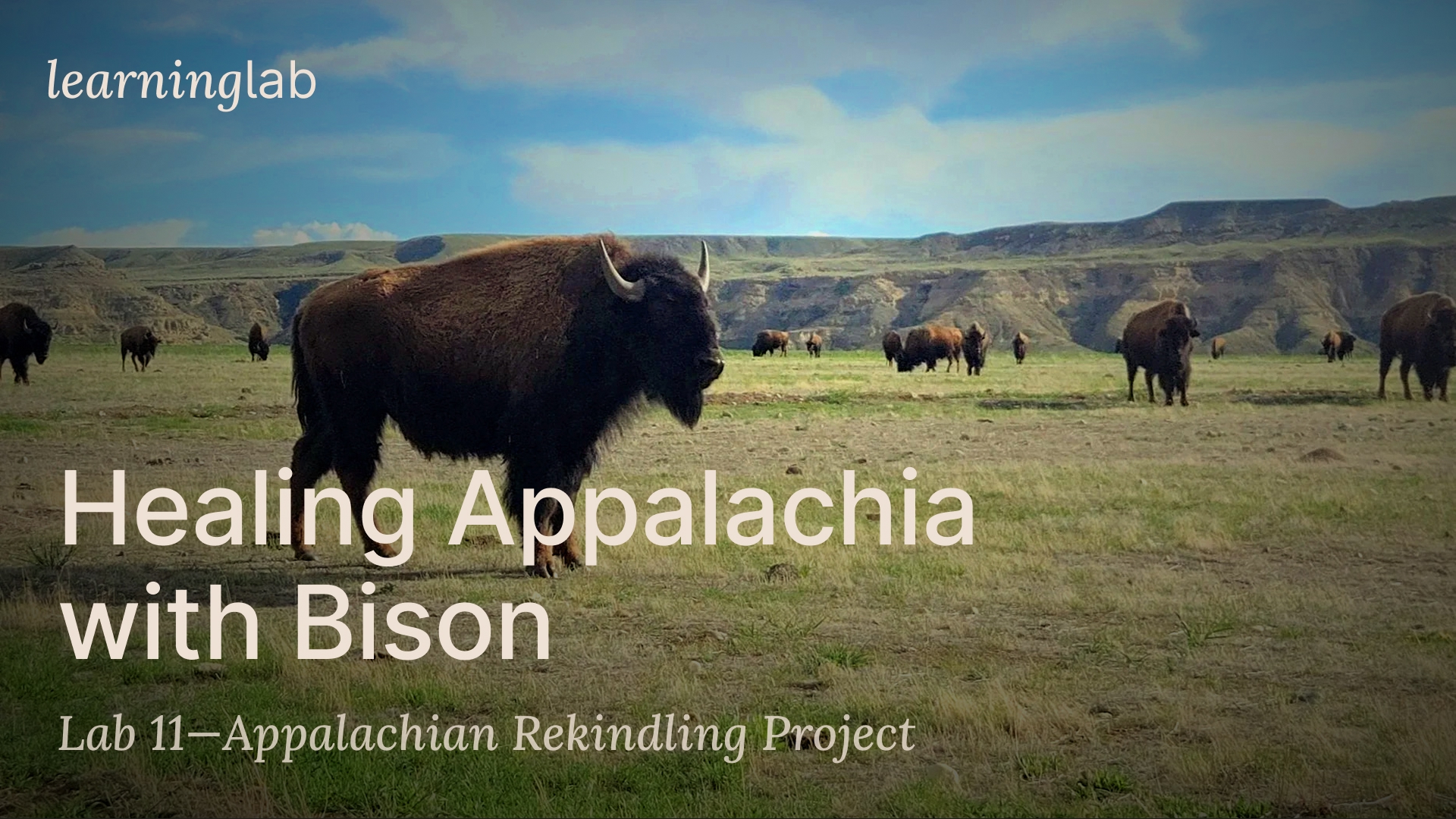
Healing Appalachia with Bison

Tiffany Pyette
"Healing Appalachia with Bison" with Tiffany Pyette of the Appalachian Rekindling Project.
The Central Appalachian Mountains are known for their abundant biodiversity and folk cultures—as well as intensive mining for coveted minerals. Where Indigenous peoples of the region once coexisted with bison, we now find mountaintop removal, underground mining, and an economy heavily reliant on the destruction of North America’s oldest and most precious mountains.
Little is spoken of an ecological event that took place in the 19th century: the slaughter of tens of millions of bison—gentle giants who once roamed the North American continent, coexisting peacefully with Native peoples of Turtle Island (also known as the United States). In a violent effort to subdue Native American stewards of the land, settler colonizers, supported by the U.S. Army, nearly eliminated these great mammals, severing ecological, cultural, and spiritual threads of relationship and reciprocity.
That is, until the team behind the Appalachian Rekindling Project had an idea: could they bring bison back to forgotten, mistreated lands to help regenerate, rematriate, and restore the land?
For this Learning Lab, we’re joined by Tiffany Pyette (she/her), Cherokee-descendent and co-Executive Director tending to a vision of working in collaboration with bison as a keystone species, all guided by Native-governance protocols, to restore mountains of central Appalachia. Appalachian Rekindling Project is also establishing an intertribal Indigenous center where Native people can physically return and gather in central Appalachia, caring for the land collectively.
Together we’ll explore…
- Rematriation and restoring sacred relationship with land
- The quiet and profound cultural and ecological history of central Appalachia
- Approaches to collective governance and consensus for land stewardship
- How bison move earth, plant seeds, fertilize land, and heal hurting landscapes
Join Tiffany of the Appalachian Rekindling Project to hear about the power of stewarding a collective vision, and working in partnership with the mighty bison. It is a deep and inspiring initiative with kernels of wisdom for all land stewards, and we hope to see you there.
Healing Appalachia with Bison
